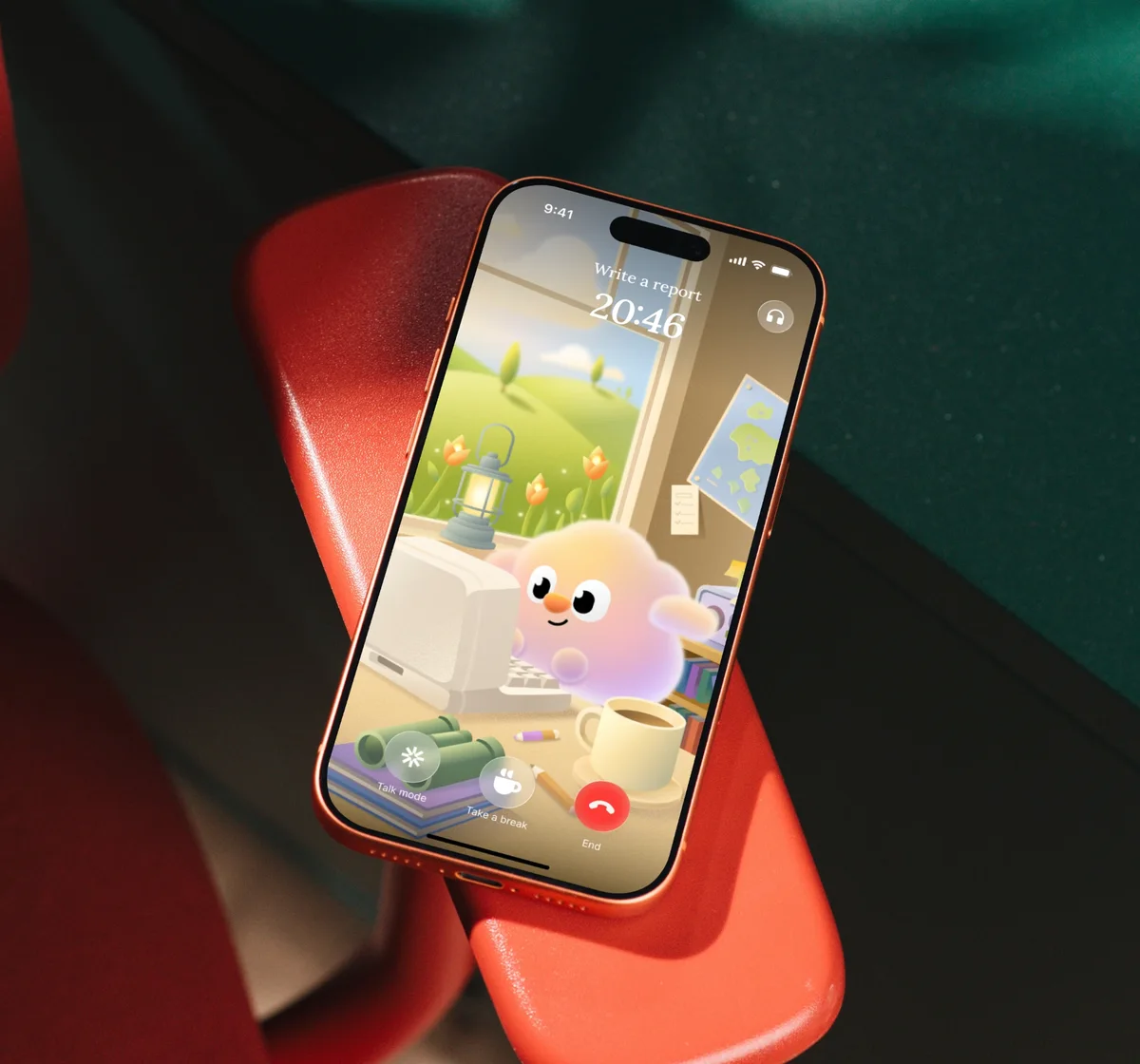

Why Lumer calls you instead of sending a notification
Notifications are easy to swipe away. A call at the time you agreed on feels different, and that’s on purpose.
Summary
A gentle call is harder to ignore than a banner, and it brings company with it, which is what actually helps you start.
Lumer calls you instead of sending a notification because notifications are easy to swipe away, and even when they land, they can only tell you to start. A call at the time you agreed on asks for a moment of your attention. And it brings company with it, which is what often helps you actually begin.
Notifications are easy to miss
Your phone probably buzzes dozens of times a day. Messages, group chats, app updates, sales, reminders you set weeks ago and no longer remember why. Most of them get the same treatment: a glance, a swipe, gone. A reminder that says “start your task” sits in that same pile, looking exactly like everything else.
Some people respond by turning most notifications off, which is often a sensible thing to do. But then the one reminder that mattered goes quiet too. Others set three or four alarms for the same task, and learn to snooze all of them. Neither feels great, and neither really helps with the moment you need to begin.
Why do I ignore reminders and notifications?
For many people with ADHD, a notification is barely a signal at all. You see it, you mean to act on it, and a minute later it has slid out of your mind. It isn’t that you don’t care. It’s that a small banner has to compete with everything else in your head, and it rarely wins for long.
There’s another catch. Notifications don’t just get ignored; they also pull at your attention when you don’t want them to. In one study, simply receiving phone notifications disrupted people’s performance on an attention-demanding task, even when they didn’t pick up the phone. So a stream of alerts can make focus harder while still failing to get you started.
Even when a reminder lands, it can only tell you to start. It can’t help with the actual hard part, which is the moment of starting itself. We explore that moment in why starting feels harder than doing.
A call feels different
A phone call asks for something a banner doesn’t: a moment of your attention. It rings, it waits, and it’s clearly meant for you. That small difference matters. It’s much harder to swipe a call away without noticing than it is to dismiss yet another alert.
That’s why Lumer calls you at the time you agreed on. You choose when you want to start, and at that time your phone rings. Lumer says hello, helps you find a small first step, and then stays with you while you take it. It’s a bit like a friend who said, “I’ll ring you at four and we’ll get going together.”
Agreeing on a time matters too, especially if time tends to slip away from you. A call that arrives at the moment you planned is a clear signal that now is now, which can help with the kind of time blindness many people with ADHD describe.
A notification tells you to start. A call keeps you company while you do.
Why company is the point
The call isn’t just a louder alarm. The real reason Lumer calls is what comes with the call: someone there with you. Starting is often easier with company, the idea behind body doubling.
Many people already rely on this. In a 2024 survey of 220 people, most of them neurodivergent, participants described using the presence of others, in person or remotely, to start a task, stay focused and get it done. A call brings that company to you at exactly the moment you planned to begin, instead of leaving you alone with a reminder and a wall.
It works for all kinds of starts: sitting down to homework, beginning revision, opening a work document, tackling a pile of laundry, or making that phone call you’ve been putting off.
Gentle by design
The call is designed to be gentle. Lumer doesn’t keep streaks, give you scores or ask whether you did it. If today isn’t the day, you can decline, and nothing bad happens. It will call again next time, without holding it against you. Picking up doesn’t lock you into anything, either; you can say hello and go do something else.
That matters because pressure tends to make the wall higher, not lower. A reminder that makes you feel guilty is easy to start avoiding. A friendly voice that turns up on time, and doesn’t mind if you’re not ready, is easier to keep saying yes to.
What a Lumer call is (and isn’t)
- It comes at a time you chose, for a task you set up. It doesn’t appear out of nowhere.
- It brings company. Lumer can walk you through the next step, or stay quietly while you work.
- It’s easy to say no to. Declining costs nothing, and if you’d rather not take calls, any task can use an alarm or a notification instead.
Built for the moment before
Most tools focus on what you need to do. Lumer focuses on the moment right before you do it, the one where you know the task and still can’t begin. A call at the time you agreed on is our way of meeting you in that moment, not to push you, but to sit beside you.
So when your phone rings at four, it’s not a test. It’s just company, arriving on time.
FAQ
Why does Lumer call instead of sending a notification?
Notifications are easy to swipe away, and they can only tell you to start. A call asks for a moment of your attention and brings company while you begin.
Do I have to answer when Lumer calls?
No. You can decline and nothing bad happens. There are no streaks or scores, and Lumer will simply call again next time.
Can I use an alarm or notification instead of a call?
Yes. If you’d rather not take calls, any task can use an alarm or a notification instead.