Time blindness, explained without the jargon
Why “in a minute” can quietly become an hour, and a few ways to make time visible again.
Summary
For many ADHD brains time is felt, not tracked. Make it visible with timers, alarms you can see, or someone checking in.
Time blindness is an informal way to describe difficulty sensing time: how long something has taken, how much is left, or how close a deadline really is. Many people with ADHD know it well. It isn’t carelessness, and making time visible outside your head can help.
When “in a minute” becomes an hour
You sit down to check one message before getting ready. You look up and forty minutes have gone, you’re late, and you honestly can’t say where the time went. Or the opposite: an assignment due in two weeks feels like it lives in a distant future, until suddenly it’s tomorrow.
It shows up everywhere. The quick game before homework that lasts all evening. The shower that was meant to take ten minutes. The “I’ll leave at half past” that turns into running for the bus. Each one can feel like a small mystery, and together they can make you feel unreliable.
What is time blindness?
People sometimes call this time blindness. It isn’t a medical term, just a plain way to describe something many people with ADHD know well: time doesn’t register the way it seems to for others.
Research backs up part of this experience. A 2022 meta-analysis of 55 studies found that, on average, people with ADHD had more difficulty with a range of timing tasks, such as telling short durations apart and estimating or producing intervals of a few seconds, than people without ADHD. Lab tasks lasting seconds aren’t the same as losing an afternoon, but they suggest the sense of time itself can work differently.
The NHS also lists finding it hard to organise your time among the signs of ADHD in adults. So if this sounds familiar, you’re in good company.
Felt time versus tracked time
Some people have a kind of background clock running. Without looking, they sense that about twenty minutes have passed and it’s time to move on. For many ADHD brains, that clock is faint or unreliable. Time isn’t tracked; it’s felt. And feelings are unreliable timekeepers.
When something is interesting, time vanishes. When something is boring, five minutes stretch forever. Future deadlines feel unreal until they become “now”, because it can feel like there are only two settings: now and not now.
Time isn’t tracked; it’s felt.
None of this is carelessness. People with time blindness often care a lot about being on time, and they feel awful when they aren’t. The problem isn’t how much you care. It’s that the signal saying “time is passing” doesn’t arrive on its own.
Making time visible
If your brain doesn’t track time on its own, the answer is to move time outside your head, somewhere you can see it or hear it. The aim isn’t to become a different kind of person. It’s to give yourself the signal your brain doesn’t send.
Timers you can see work better than timers that hide in a phone. A clock in every room, especially the bathroom and by the front door, helps more than you’d expect. Alarms work best when they’re specific: not just a beep, but a label that says “leave for the bus now” or “start getting ready for practice”.
It also helps to measure things once. Time how long your morning routine, your walk to school or your usual homework subject really takes. The real number is often different from the felt one, and knowing it makes planning less of a guess.
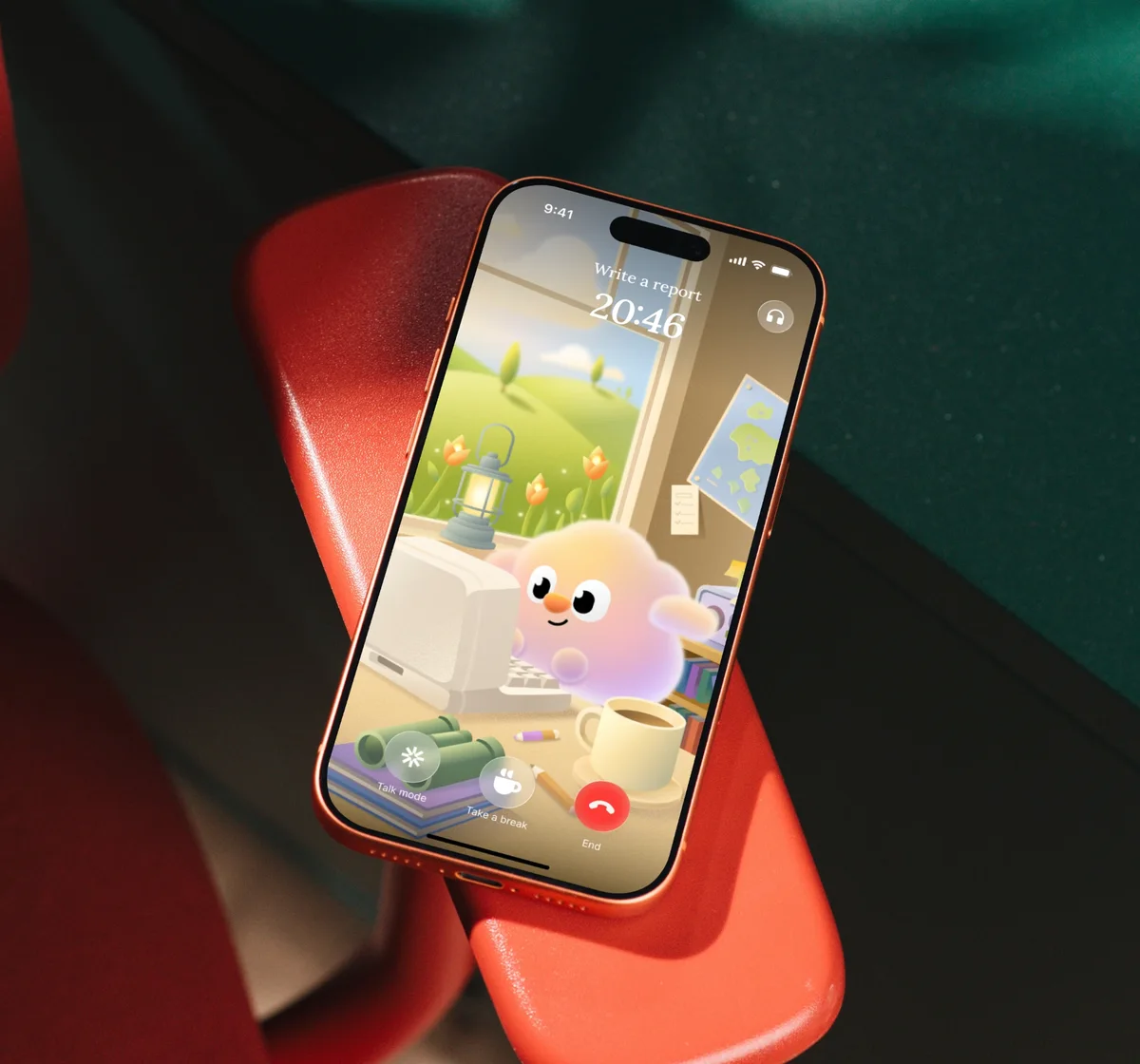
People help, too. A friend who checks in, a parent or partner who says “ten minutes”, a call at the time you agreed: these turn the passing of time into something you actually notice. That’s much of the thinking behind why Lumer calls you instead of sending a notification.
Try this to make time easier to see
- Use a visual timer for focused tasks, one that shows the time shrinking, not just a number.
- Set alarms with clear labels for transitions: when to stop, when to get ready, when to leave.
- Ask someone to check in at the moment you need to switch, or arrange a call for the time you planned.
Watch for the hours that vanish
Time blindness doesn’t only make you late. It can also make you lose hours in a task without noticing you’re hungry, thirsty or stiff, and then crash later. An alarm for a break is as useful as an alarm to start. We’ve written more about that in rest isn’t a reward you have to earn.
Big, faraway deadlines need a different kind of visibility. Break them into small dated steps on a calendar you actually look at, so “two weeks away” becomes “today: find three sources”. A tiny first step, like the ones in the two-minute door, turns a distant deadline into something you can touch today.
Go easy on yourself
You’ll still lose track sometimes. Everyone does, and with ADHD it may happen more often. When it does, try not to pile shame on top. Shame doesn’t make you better with time; it just makes the next moment heavier.
It can help to tell the people around you, too. A teacher, coach, friend or family member who understands that you’re working on this is usually happy to send a quick “ten minutes” message, and it means you don’t have to manage every reminder on your own.
Then treat each slip as information. Which part of the day got away from you? Where could a reminder have helped? Small, visible signals, added one at a time, can make time feel a lot less slippery.
FAQ
What is time blindness?
It’s an informal name for difficulty sensing how much time has passed or how far away something is. Many people with ADHD recognise it.
Is time blindness a medical term?
No. It’s an everyday description, not a formal term. Research does suggest that, on average, people with ADHD perceive and estimate time differently.
What helps with time blindness?
Moving time outside your head: visual timers, clocks where you can see them, clearly labelled alarms, and people who check in at the moment you need to switch.